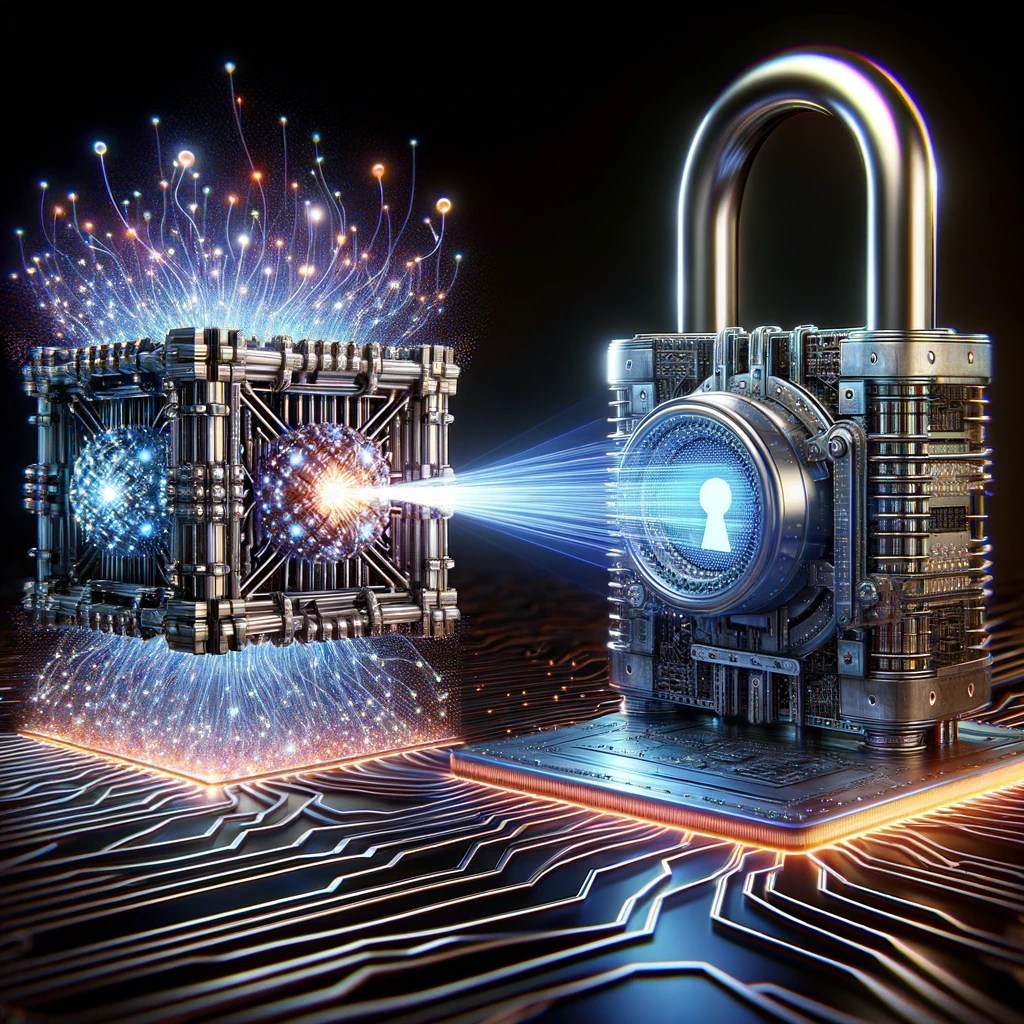
Quantum computers are extremely powerful and could break current methods that keep information private online, pushing cryptographers, who develop communication methods, to create new solutions securely.
Many secure internet users today rely on public and private keys, like a lock and key, to encrypt messages. But quantum computers may be able to break the math these keys use.
One promising approach is lattice-based cryptography. It hides data in complex structures, making it very hard for quantum algorithms to recover the information that could resist attacks from quantum computers.
People are working on “quantum shields” to protect against these new threats:
- Quantum key distribution uses physics to share keys securely—any attempt to steal the key changes it, warning the users.
- Multivariate cryptography hides keys in equations with multiple variables. It creates puzzles that are easy for the intended recipient but almost impossible for others.
Researchers are also exploring code-based cryptography, which hides data in error-correcting codes, and isogeny-based cryptography, which uses mathematical properties of graphs.
The field keeps developing new ways to keep our communications private, even with quantum computing. Computing and cryptography push each other to advance, showing why we need creative solutions to security in the quantum future.