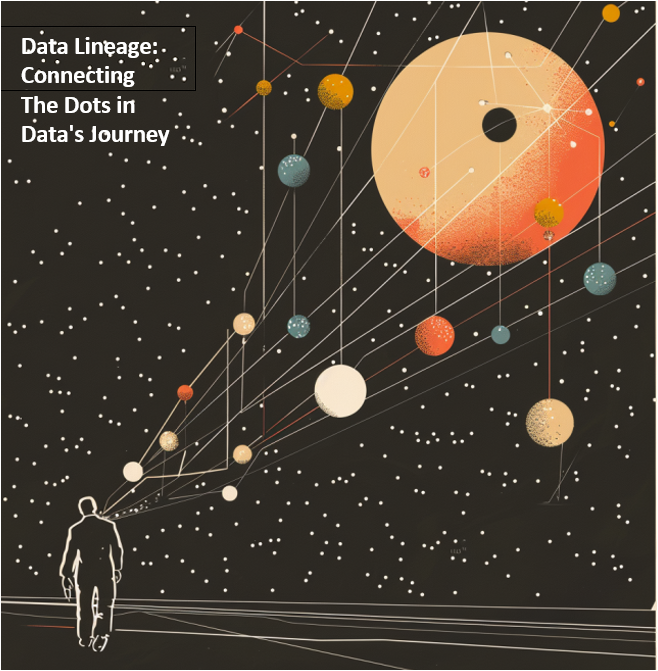
Data lineage is a critical concept within data management that revolves around tracing and documenting the life cycle of data as it moves through various processes within an organization. It covers understanding the origins of data, its transformation and processing, and its utilization within the business. This concept serves as a form of data storytelling, offering a narrative of the data’s journey, which is crucial for several reasons.
Firstly, data lineage enhances transparency within data management processes, allowing organizations to trace errors back to their source, understand data flow, and improve data quality. It is particularly vital in complex systems where data moves through numerous transformations and systems before reaching its final form. By mapping these pathways, organizations can identify bottlenecks, inefficiencies, and potential risk areas.
Secondly, data lineage significantly contributes to meeting regulatory compliance requirements. Numerous industries are subject to stringent data management and protection regulations, including the European General Data Protection Regulation (GDPR) and the California Consumer Privacy Act (CCPA). Data lineage helps demonstrate compliance by providing a clear audit trail of data movements and transformations, ensuring that data handling practices meet regulatory requirements.
Data lineage also supports better decision-making and operational efficiency. With a clear understanding of data origins and transformations, businesses can trust the data they base their decisions on, leading to more accurate and reliable outcomes. This trust is crucial for data-driven decision-making, where the quality and integrity of data directly impact the business insights derived from it.
Getting started with building an effective data lineage capability involves both strategic and technical considerations. Organizations should identify key data elements and processes critical to their operations and regulatory obligations. The next step involves mapping out the data flows and transformations for these key elements, which specialized data lineage tools can facilitate. These tools vary in capabilities, from basic mapping functionalities to more advanced features supporting automated lineage tracking and visualization.
In practice, there are two main types of data lineage: business and technical. Business lineage focuses on data flow through business processes, providing a high-level overview accessible to non-technical stakeholders. It answers questions about how data impacts business operations, decision-making, and compliance. Technical lineage, on the other hand, dives into the specifics of how data moves through systems and transformations, catering to the needs of IT professionals and data architects. This detailed view is essential for managing the technical aspects of data infrastructure and ensuring that data flows are optimized and secure.
Implementing data lineage is challenging. It requires a concerted effort to maintain up-to-date documentation as data ecosystems evolve. Additionally, the complexity of modern data architectures, involving numerous integrations and transformations, can make tracking lineage daunting. However, the benefits of enhanced data transparency, improved quality, and regulatory compliance make it a worthwhile investment.
In summary, data lineage is a foundational aspect of effective data management. It provides a comprehensive view of how data is collected, transformed, and used across an organization, supporting transparency, efficiency, and compliance. Organizations can enhance their data governance practices and leverage their data assets by adopting a strategic approach to documenting and understanding data flows.
References
- “Understanding the Importance of Data Lineage in Modern Data Management.” Simple Talk, Red Gate Software, https://www.red-gate.com/simple-talk/development/other-development/understanding-the-importance-of-data-lineage-in-modern-data-management/. Accessed 1 Mar. 2024.
- “The Benefits of Data Lineage for Your Governance Strategy.” Opendatasoft Blog, Opendatasoft, https://www.opendatasoft.com/en/blog/the-benefits-of-data-lineage-for-your-governance-strategy/. A Accessed 25 Feb. 2024.
- “6 Benefits of Data Lineage: Why Businesses Are Eager to Invest.” Atlan, Atlan, https://atlan.com/data-lineage-benefits/. Accessed 25 Feb. 2024.
- “Differences Between Technical Lineage and Business Lineage.” Collibra Documentation, Collibra, https://productresources.collibra.com/docs/collibra/latest/Content/CollibraDataLineage/ref_technical-lineage-diagram-differences.htm. Accessed 24 Feb. 2024.
- “Why Is Data Lineage a Critical Aspect of Data Management?” Secoda Blog, Secoda, https://www.secoda.co/blog/critical-aspect-of-data-lineage. Accessed 24 Feb. 2024.