
Introduction
Imagine a patient urgently needing surgery, only to be told that the procedure is delayed indefinitely due to a cyberattack? This was the reality for countless individuals affected by the Change Healthcare breach, as hospitals nationwide scrambled to cope with disrupted systems and delayed care. The attack began in February 2024 and sent shockwaves through the U.S. healthcare system, exposing vulnerabilities and raising urgent questions about data security and patient safety.
Timeline of Events
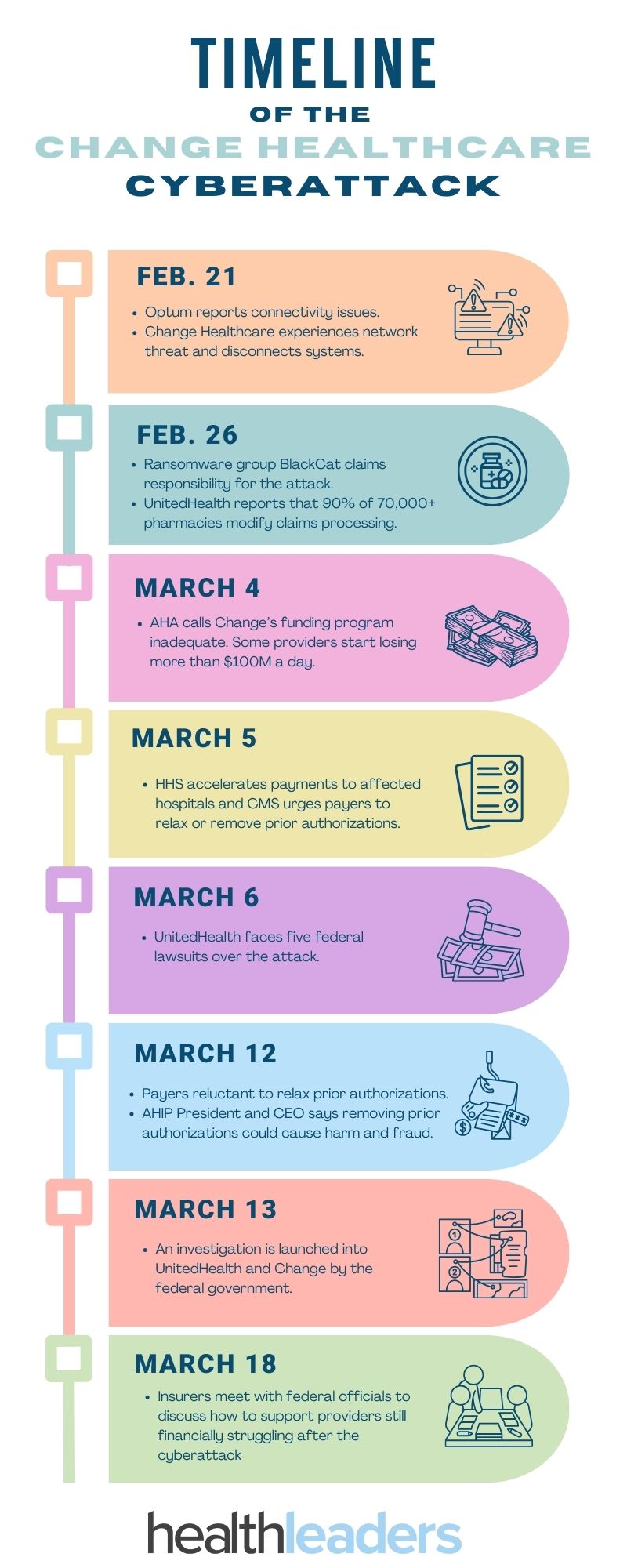
February 21-27: Initial Attack and Immediate Response
The cyberattack on Change Healthcare began on February 21, 2024, when UnitedHealth Group (UHG) disconnected Change Healthcare’s systems to mitigate the attack’s spread. By February 26, the ransomware group BlackCat claimed responsibility, stating it had stolen six terabytes of data. Change Healthcare confirmed the breach and began collaborating with cybersecurity firms and law enforcement to address the situation 1.
March 3-12: Government and Legal Actions
The Department of Homeland Security warned about the attack, and plaintiffs filed lawsuits against UnitedHealth Group. The federal government investigated the attack, focusing on HIPAA compliance. This period also saw the American Hospital Association (AHA) urging Congress to assist hospitals impacted by the cyberattack 1 3.
March 13-21: Provider Lawsuits and Regulatory Actions
Healthcare providers began filing lawsuits, and regulatory bodies like the AHA and the Centers for Medicare & Medicaid Services (CMS) took steps to mitigate the attack’s impact. These steps included calls for more transparency and expedited payments. Change Healthcare started restoring its key platforms, and stakeholders in Congress and healthcare organizations expressed significant concern an frustration 1.
March 22-26: Restoration and Congressional Oversight
Change Healthcare began restoring its largest clearinghouse platforms, processing $14 billion in claims. Congressional representatives pushed for more accountability from UnitedHealth Group, seeking briefings and hearings to understand the full scope of the attack and response 1.
Impact of the Cyberattack
Financial and Operational Disruptions
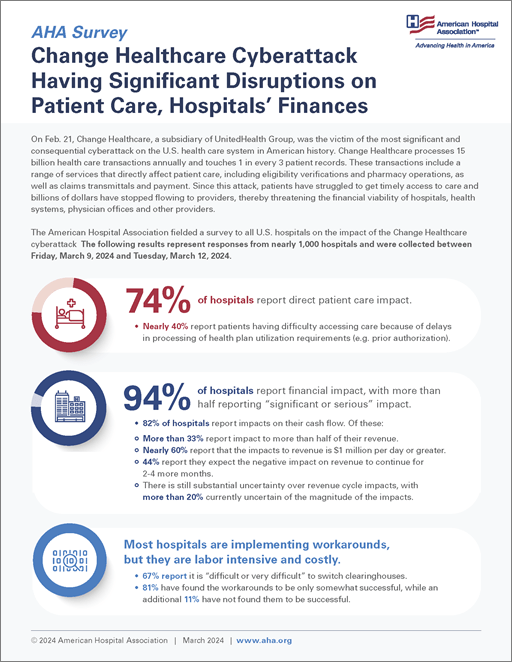
The attack had a profound financial impact on nearly all hospitals, with 94% reporting financial damage and more than half describing the impact as significant or serious. The disruption threatened hospitals’ ability to make payroll and acquire necessary medical supplies 3 4. UnitedHealth Group provided over $6 billion in financial assistance and interest-free loans to affected providers, although many found this insufficient 3 4.
Patient Care and Data Security
The cyberattack severely impacted patient care, with 74% of hospitals reporting delays in authorizations for medically necessary care. Millions of Americans may have had their sensitive health information leaked onto the dark web, despite UnitedHealth paying a ransom to the attackers 3 5.
Responses and Mitigation Efforts
Government and Regulatory Actions
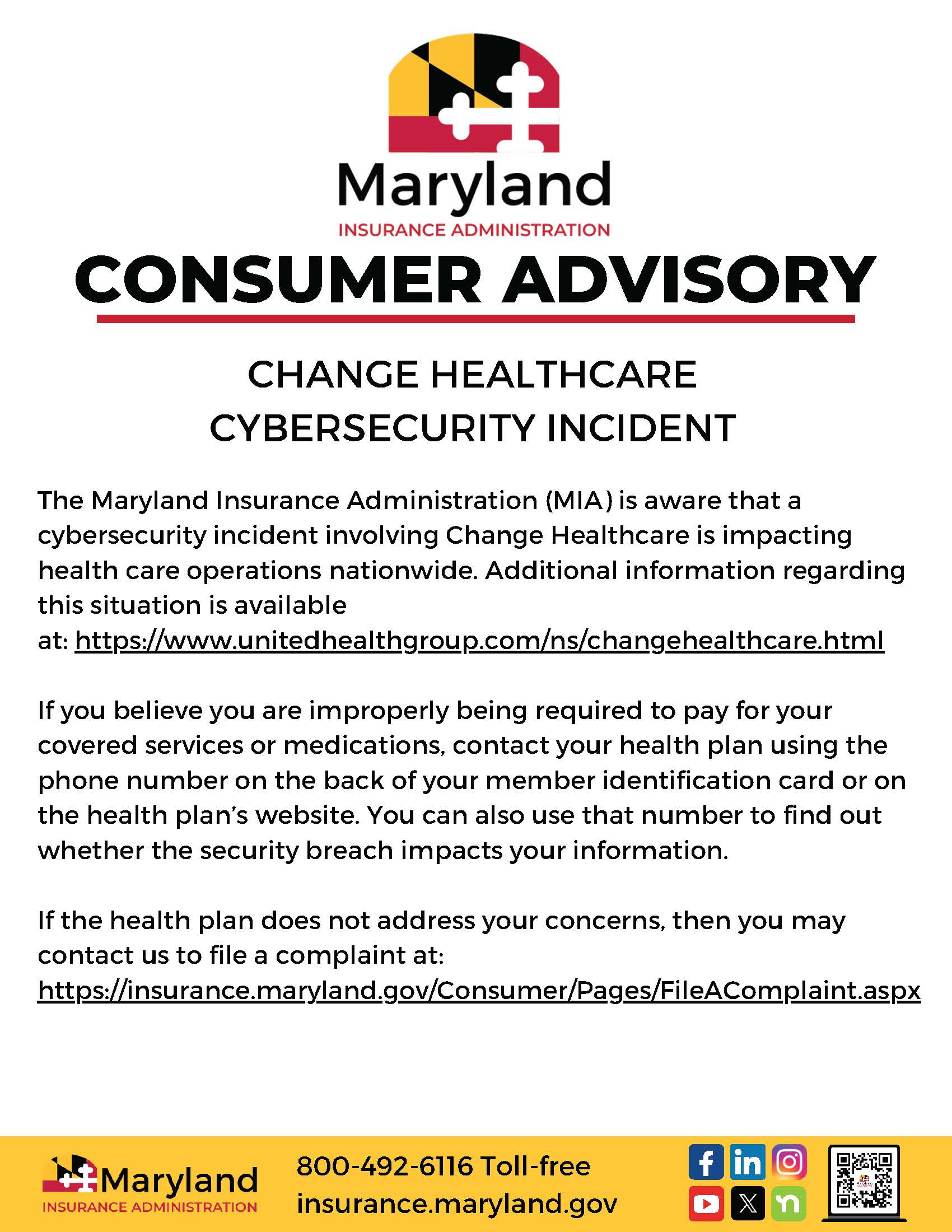
The federal government launched investigations and assisted impacted organizations through agencies like the Department of Health and Human Services (HHS) and the Office for Civil Rights (OCR). CMS issued guidance for interim Medicaid payments to providers affected by the attack.
Congressional Oversight and Industry Reactions
Congressional representatives called for more accountability and transparency from UnitedHealth Group. Lawmakers expressed concerns about the healthcare industry’s vulnerabilities to cyberattacks and the need for improved cybersecurity measures 1 3.
Restoration and Future Precautions
Change Healthcare began restoring its systems and services, including medical claims preparation software between March 22nd and 26th, 2024. The company also confirmed that BlackCat/ALPHV was behind the attack and that a review of the impacted data was ongoing 3 5.
My Takeaway
The Change Healthcare cyberattack underscores a disturbing trend: ransomware groups increasingly target critical infrastructure, particularly healthcare, where the stakes are life and death. This attack disrupted operations and exposed the vulnerability of healthcare IT systems, often hampered by underfunding and outdated technology. Adding to the concern was the initial lack of transparency surrounding the breach, causing confusion and delaying the response of affected organizations.
The healthcare industry must prioritize a culture of openness and preparedness. Regular scenario-based training for IT staff and executives to ensure a swift, coordinated response at all levels. The Change Healthcare incident is a stark warning to the healthcare sector, highlighting the urgent need for collaboration to modernize defenses and safeguard patient data from future attacks.
- HealthTechSecurity. (2024). Change Healthcare cyberattack fallout continues. TechTarget. Retrieved August 16, 2024, from https://www.techtarget.com/healthtechsecurity/news/366594065/Change-Healthcare-cyberattack-fallout-continues
- WhatIs.com. (2024). The Change Healthcare attack: Explaining how it happened. TechTarget. Retrieved August 16, 2024, from https://www.techtarget.com/whatis/feature/The-Change-Healthcare-attack-Explaining-how-it-happened
- Devers, C. (2024). Lawmakers express frustrations over Change Healthcare cyberattack. Chief Healthcare Executive. Retrieved August 16, 2024, from https://www.chiefhealthcareexecutive.com/view/lawmakers-express-frustrations-over-change-healthcare-cyberattack
- American Hospital Association. (2024, March 20). Congress urged to help hospitals impacted by Change Healthcare cyberattack. Retrieved August 16, 2024, from https://www.aha.org/lettercomment/2024-03-20-congress-urged-help-hospitals-impacted-change-healthcare-cyberattack
- U.S. House Committee on Energy and Commerce. (2024). What we learned: Change Healthcare cyberattack. Retrieved August 16, 2024, from https://energycommerce.house.gov/posts/what-we-learned-change-healthcare-cyber-attack